Last updated November 18, 2026
How Long Does Room Addition Contractor Take? Timelines and What to Expect
A contractor who promises a room addition “done in six weeks” either hasn’t pulled a permit in North Las Vegas recently or is planning to work without one. Either way, that timeline is a warning sign, not a selling point. Room additions here run on two clocks that homeowners consistently underestimate: the City of North Las Vegas plan review, which moves on the building department’s schedule, and the inspection queue that adds real days between each trade. This guide breaks down honest day counts for both phases, explains which delays a contractor controls and which nobody can, and shows you what to ask for so you can spot a realistic schedule from a rehearsed one.
Quick Answer
A typical room addition in North Las Vegas takes four to seven months from signed contract to final inspection. Plan review at the City of North Las Vegas usually eats four to eight weeks of that on its own, and the construction phase runs roughly 10 to 20 weeks depending on size. A garage conversion can land closer to 10 weeks on site; a full structural addition with new foundation and roofline often runs 18 to 22 weeks.
Table of Contents
- Phase One: Permit Review at the City of North Las Vegas
- Phase Two: The Construction Timeline, Trade by Trade
- What “Weather Delay” Actually Means in the Las Vegas Valley
- Why Subcontractor Booking Is the Hidden Clock
- Substantial Completion vs. Final Inspection Sign-Off
- What Slows a North Las Vegas Addition Down
- Prefab and Modular Options and How They Change the Calendar
Phase One: Permit Review at the City of North Las Vegas
Permit review is the first place a timeline goes wrong, and it’s the place a contractor has the least leverage. Once your plans hit the counter at the City of North Las Vegas building department, you’re in their queue. Nobody can jump it. What a good contractor can do is reduce the number of times your plans go back for revision, which is where most of the lost weeks hide.
Three things drive how long review takes:
- Plan complexity. A single-room bump-out with a straightforward foundation is a lighter review than an addition that changes the roofline, adds a bathroom, or requires a setback variance (the city’s written permission to build closer to the property line than the standard rule allows).
- Revision cycles. Each round-trip between the reviewer and the designer adds days. A plan that comes back with structural or energy-code comments can add two to four weeks per cycle. Experienced plan sets usually clear in one pass; plans drawn to save a fee often don’t.
- Backlog seasons. Spring through early summer, review times stretch as permit applications stack up. Late fall and winter tend to move faster.
For a clean, code-compliant plan set, four to six weeks is a realistic review window. Add two to four weeks for a revision cycle. Site-plan review and HOA approval, where applicable, sit on separate tracks and can run in parallel – or they can stall the whole thing if nobody chases them.
Phase Two: The Construction Timeline, Trade by Trade
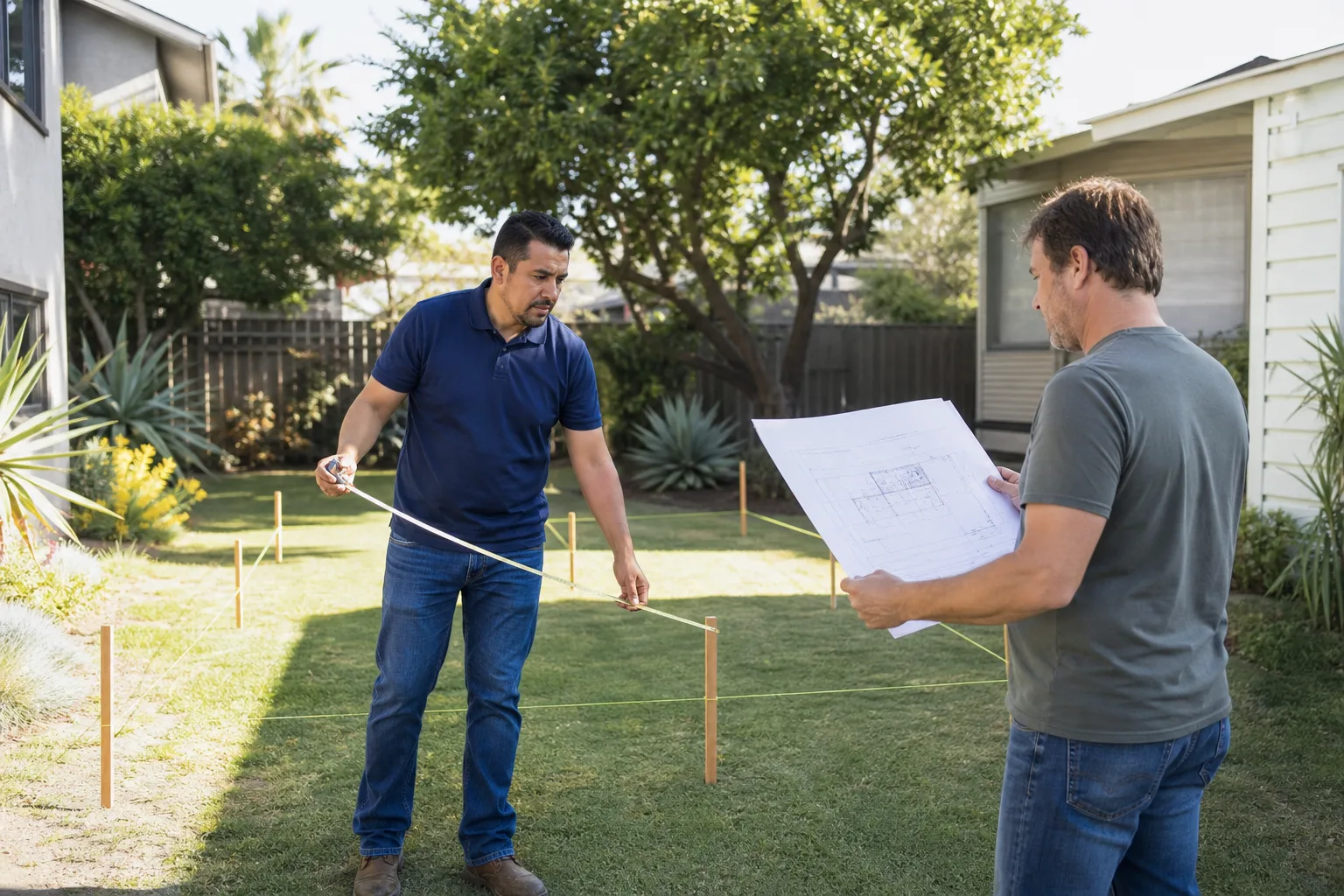
Once the permit is in hand, the job moves to the trades. The ranges below are for a mid-size addition in North Las Vegas, say 300 to 500 square feet. Every project is different, but these day counts give you a benchmark to hold a schedule against.
- Site prep and foundation – 5 to 10 days. Excavation, forms, and pour. Concrete needs cure time before framing starts, and in July, pour schedules get pushed to early morning to avoid the worst heat.
- Framing – 7 to 14 days. Walls up, roof framed and dried in. This is where framing inspection gets scheduled.
- Rough-in trades – 5 to 10 days. Electrical, plumbing, and HVAC roughed in before walls close. Rough-in inspections follow, and the inspection queue is the real variable here.
- Insulation and drywall – 6 to 10 days. Insulation goes in, then drywall hang, tape, and texture. Drywall mud needs to dry between coats – you can’t rush it without cracking later.
- Finish work – 10 to 20 days. Cabinets, trim, paint, flooring, fixtures, final MEP trim-out. This phase has the widest swing, because material lead times land here.
Add the inspections between each phase. In North Las Vegas, the difference between a smooth sequence and a stalled one is whether the contractor books inspection slots before the trade finishes or after. Ask that question directly.
What “Weather Delay” Actually Means in the Las Vegas Valley
Homeowners moving from wetter climates expect weather to blow up a schedule. In North Las Vegas, it does – but in a narrow, specific way. We’ve seen more schedules slowed by heat than by rain.
- Summer concrete pours. When daytime highs push past 105°F, concrete sets too fast and can crack. Crews pour early morning or wait for a break. A one to three day shift per pour is common in July and August.
- Roofing adhesion. Roofing materials need the right temperature window to seal properly. Extreme heat can push a roofing crew to reschedule rather than risk a failed membrane.
- Monsoon season, July through September. Short, intense storms can cancel a pour or an exterior day. It’s real, but it’s typically a day or two, not a week.
- Wind. Framing and roofing stop in high wind for safety. Also short.
The honest version: weather costs most North Las Vegas additions a handful of days across the whole build. It’s not the thing that turns five months into eight. Permit revisions and sub scheduling do that.
Why Subcontractor Booking Is the Hidden Clock
Here’s the part most homeowners never see. Your general contractor isn’t doing every trade – electricians, plumbers, drywall crews, and roofers all run their own calendars. If your GC books a plumber for a Monday and the framing isn’t done until Wednesday, the plumber’s next open slot might be ten days out. Three days of framing slippage becomes ten days of idle time.
Good contractors book overlapping, and they hold slots with a deposit or a standing relationship. What you can ask to see:
- A trade schedule with named dates, not “TBD.” Ask for the projected start date for each trade on paper before work begins.
- Confirmation that the electrician and plumber are on the calendar. A written trade schedule showing their slots is a real signal.
- How the contractor protects the schedule when one trade runs long. The answer should be specific: who they can slide in, or what gets pulled forward.
- A weekly update during construction. If you’re not getting one, ask why.
Fielding ADU Builders puts the price in writing before any work starts, and the schedule follows the same discipline – show up in the window, price in writing, by the book. That’s how we hold the Garrison Standard on every addition, and it’s why we ask subs to confirm their slots before we set a start date. You can see how that plays out on our room addition contractor in North Las Vegas page.
Substantial Completion vs. Final Inspection Sign-Off
These are two different dates, and homeowners plan around the wrong one.
Substantial completion is when the space is livable – walls painted, floor in, fixtures working, punch list mostly closed. This is usually what a contractor means when they say “the job is done.”
Final inspection sign-off is when the City of North Las Vegas building inspector signs off that the work matches the approved plans and meets code. It usually lands days to a couple weeks after substantial completion, and it’s the date that matters for closing out the permit, and for anything you do later that requires the permit record.
If you’re planning to use the addition for a specific date – a family move-in, a home business, an appraisal – build the buffer around the final sign-off, not substantial completion. And ask your contractor: “When will the final inspection be scheduled, and who’s tracking it?” The gap between the two dates is where permit records get left open and can surface later when you go to sell or refinance.
What Slows a North Las Vegas Addition Down
Beyond permits and subs, a handful of variables move the needle:
- Addition type. A garage conversion is the fastest route to finished square footage, because the structure and roofline already exist. A ground-up addition takes longer because everything is new. We cover garage conversions in depth on our garage conversion contractor in North Las Vegas page.
- Structural changes. A new roofline, load-bearing changes, or foundation work on tricky soil add weeks, both in review and in construction.
- Material lead times. James Hardie siding and prefab components usually order in weeks; custom cabinetry can run longer. Ask for lead times on the specific materials chosen.
- HOA and neighborhood rules. Some North Las Vegas neighborhoods have their own architectural review. That process runs parallel to the city, but it can hold a start date.
- Lot and setback. Additions that push toward the property line may need a variance, which adds review time and, occasionally, a hearing.
Prefab and Modular Options and How They Change the Calendar
Prefab and modular builds shift the calendar in a useful way: manufacturing happens off-site, in parallel with permit review, so site work gets compressed. The trade-off is that the module itself has a factory lead time and a delivery date you’ll build around.
We work with the major platforms – Abodu, Cover, Dvele, Mighty Buildings, Boxabl, and Plant Prefab – and each has a different lead time and site requirement. Boxabl units ship faster; Abodu and Cover run their own schedules; Dvele and Mighty Buildings offer higher-spec finishes that affect the build. For homeowners comparing a site-built addition to a prefab ADU, the honest answer is that prefab moves the uncertainty from the job site to the factory order, and it can save weeks on framing and finish. You can weigh the options on our ADU builders in North Las Vegas page, or start with our Fielding ADU Builders North Las Vegas home page for the full picture.
Common Mistakes to Avoid
- Accepting a verbal timeline. A schedule that isn’t on paper isn’t a schedule. Ask for the projected dates for each phase in writing before you sign.
- Starting work before the permit is issued. A contractor who offers to “start now and pull the permit later” is rolling the dice with your project. If the inspector catches unpermitted work, you may have to tear it out.
- Planning the move-in around the wrong date. Build your timeline around final inspection sign-off, not substantial completion. The gap of one to two weeks is real.
- Choosing a contractor by lowest bid and shortest promise. A bid that undercuts the others by thousands and promises a six-week finish is often a bid that didn’t include the permit, the inspections, or a real sub schedule.
- Ignoring the setback question early. If your plan approaches the property line, the variance (the city’s written permission to build closer than the standard rule allows) adds review time. Ask on day one, not week six.
- Forgetting HOA architectural review. Some North Las Vegas communities run their own review. It can hold your start date by weeks if nobody starts it early.
- No written price. A day-one number that changes at the door is the most common complaint we hear. Insist on the full price in writing before the first nail.
When to Call a Professional
If you’re planning a room addition, garage conversion, or ADU in North Las Vegas and you’re not sure whether the timeline you’ve been quoted is realistic, that’s the call. We build to the Garrison Standard – price in writing before any work starts, background-checked and uniformed crews, a full year of written guarantee that we come back and make right at no charge if something fails, and live-person phone coverage around the clock. Our technicians have up to 20 years of experience, and we work in both conventional builds and the major prefab platforms. Fielding ADU Builders North Las Vegas offers free estimates in North Las Vegas – call (844) 797-5166 and we’ll walk through a realistic schedule for your project.
Frequently Asked Questions
Most room additions in North Las Vegas take four to seven months from signed contract to final inspection. Plan review at the City of North Las Vegas accounts for four to eight weeks, and construction runs roughly 10 to 20 weeks. A garage conversion can move faster; a full structural addition usually runs longer. Call (844) 797-5166 for a schedule tailored to your lot.
It can, especially if the plan set needs a revision cycle. A clean, code-compliant plan typically clears in four to six weeks. Add two to four weeks per revision, and add more during peak spring backlog. The best way to shorten review is to submit a complete plan the first time – revising after submittal is what costs weeks.
Not the queue itself, but they control when they book the inspection. A contractor who books the slot before the trade finishes avoids the gap between “rough-in done” and “inspector arrives.” If the contractor waits until the trade finishes to schedule, expect a week of idle time per inspection.
Summer heat affects concrete pours and roofing adhesion. When concrete sets too fast, it can crack, so crews pour early morning or hold. Roofing materials need the right temperature to seal. The impact is real but usually a handful of days per build – not weeks.
Plan around final inspection sign-off. Substantial completion means the space is usable; final sign-off closes the permit with the city. The gap between the two is usually days to two weeks. If you’re coordinating a move-in or an appraisal, build the buffer around the final sign-off.
Often yes, because manufacturing happens off-site in parallel with permit review. The trade-off is factory lead time, which varies by platform – Boxabl ships quickly, Abodu and Cover run their own schedules, and Dvele and Mighty Buildings carry higher-spec finishes. We work with all of them and can match the right path to your budget and lot.
The Bottom Line
Room addition timelines in North Las Vegas live or die on two things homeowners don’t see: permit review and inspection queues. A realistic schedule is four to seven months, with four to eight weeks of that going to the city and the rest to trades, weather, and the buffer around final inspection. The contractors worth trusting put the schedule and the price in writing, book their subs ahead, and don’t promise six weeks to win a bid. If you want a realistic schedule and a written price before work starts, call (844) 797-5166 for a free estimate.
Written by the team at Fielding ADU Builders North Las Vegas.