
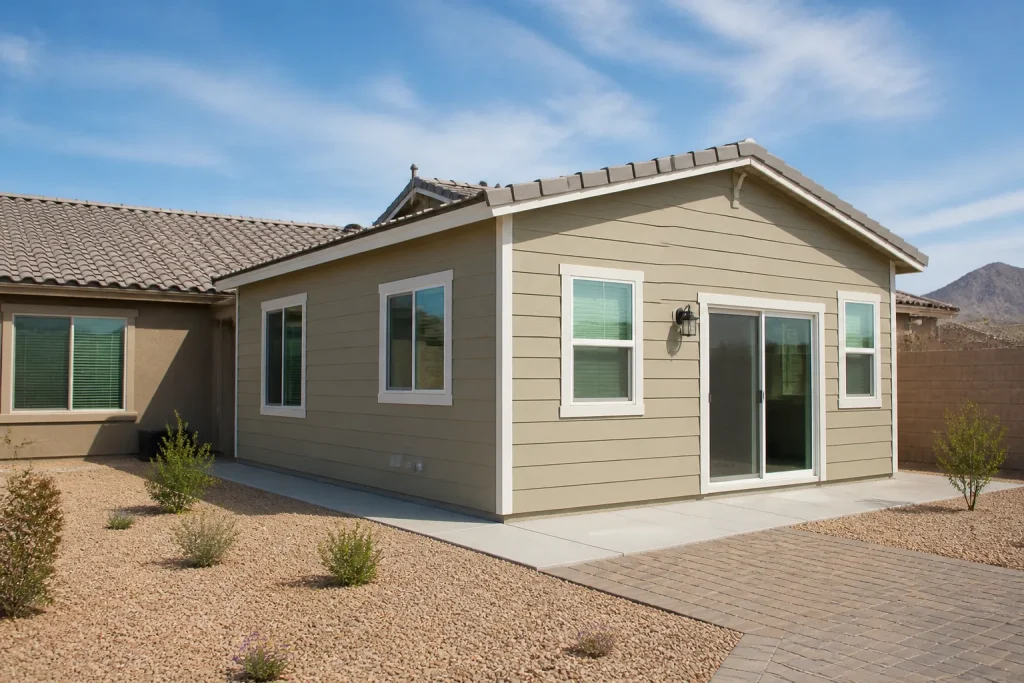
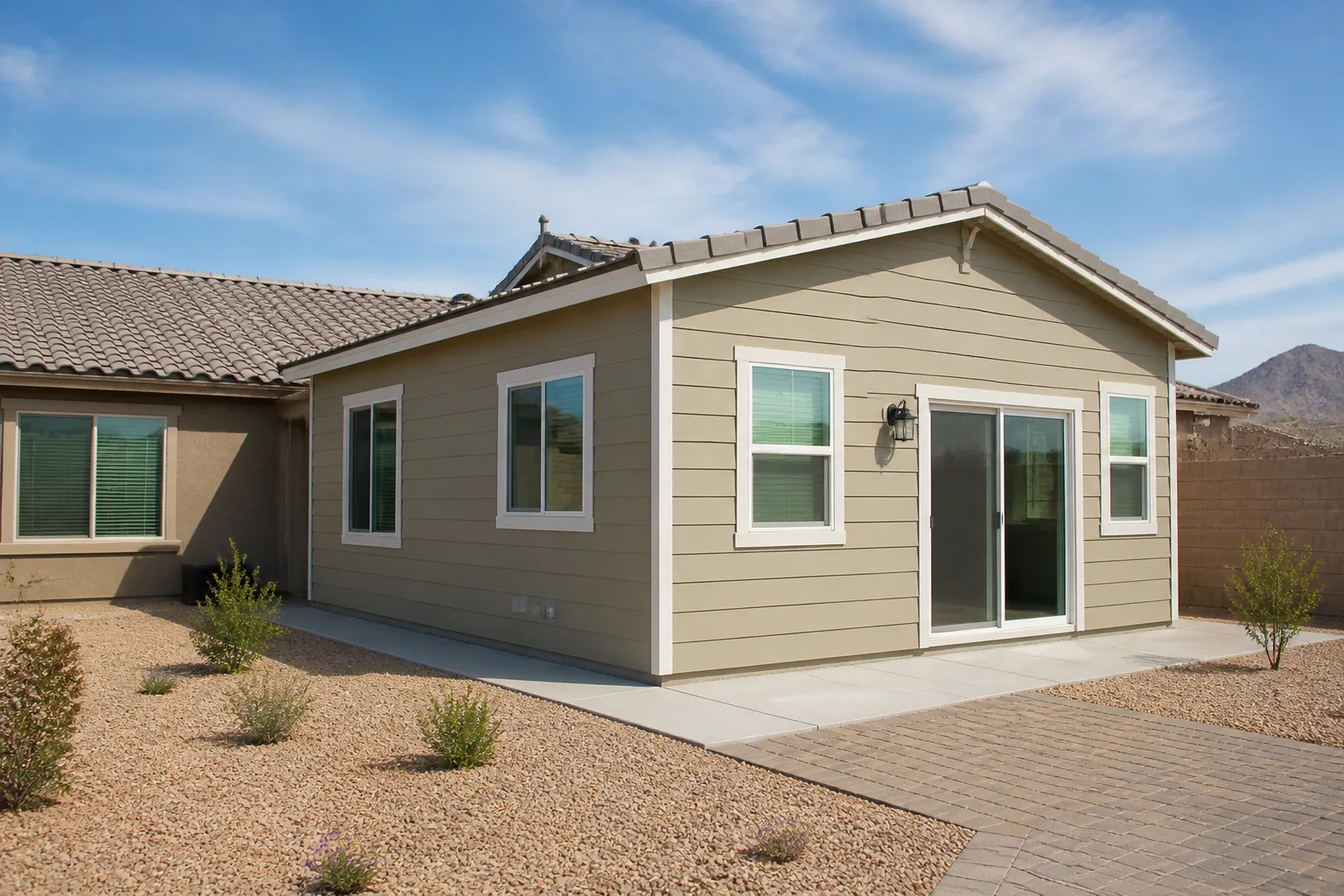
James Hardie Room Addition Contractor in North Las Vegas: A Homeowner’s Guide
James Hardie siding comes with a 30-year warranty, but that warranty is void if the installer skips the HardieZone installation manual. The Las Vegas Valley sits in HZ10, the highest heat zone Hardie maps, and its requirements for clearances, flashing, and paint are stricter than what most online guides show. Get those details wrong and the best siding on the market fails early. Get them right and a room addition in North Las Vegas can ride out decades of 110-degree summers without a single cracked board.
If you’d rather not sort through installation manuals and warranty exclusions yourself, call (844) 797-5166 and we’ll walk you through what a Hardie-clad addition actually needs here.
What Does HZ10 Mean for a Room Addition in North Las Vegas?
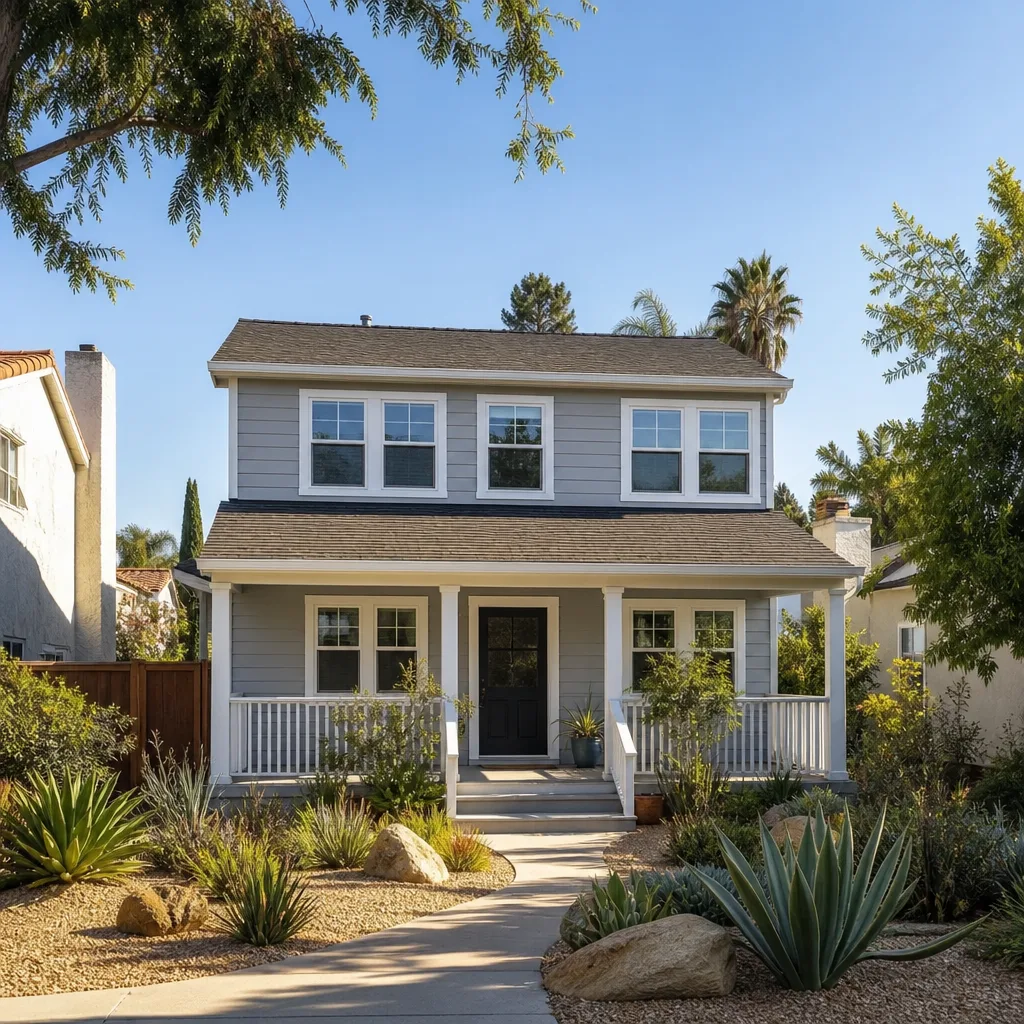
HZ10 is Hardie’s designation for the harshest heat zone in the country, and the Las Vegas Valley is one of the few metros that falls inside it. In practical terms, HZ10 installation means three things matter more here than almost anywhere else: how far the siding sits off the ground, how water gets shed at every opening, and what kind of paint goes on the face.
- Clearance from grade: Hardie requires a minimum gap between the bottom edge of the siding and finished grade. In North Las Vegas, where lots are graded fast and finish landscaping often comes a year after the build, that gap shrinks if nobody’s watching. We’ve seen warranty claims denied on additions where the homeowner added river rock right up to the boards.
- Flashing at penetrations: Every window, hose bib, light fixture, and vent needs proper flashing behind the siding, not just caulk around it. Desert sun cooks caulk into a brittle strip within two summers.
- Paint and coating specs: Hardie ships factory-primed, but the prime coat is not a finish. In HZ10, the right topcoat matters. UV here will fade cheap paint fast, and Hardie’s warranty conditions expect a coating rated for the exposure.
The manual is public. The gap between contractors is whether they read it and whether they build to it on a 110-degree afternoon when the crew is tired. If you’re comparing bids for a room addition in North Las Vegas, ask to see how each one handles grade clearance and flashing detail at the window heads. The answer separates the pros from the pretenders.
Why Hardie on an Addition Has to Match the Existing House
A room addition that looks like a separate building bolted onto your home is a permanent eyesore and a resale problem. Matching means more than finding the same lap profile. It means matching the substrate and weather barrier the rest of the house uses, then tying the two systems together so water doesn’t get trapped at the seam.
In our experience across the Las Vegas Valley, most homes built before the mid-2000s use stucco over a weather barrier. Hanging HardiePlank directly against a stucco wall with no transition detail creates a joint that will crack on the first big temperature swing. The correct approach is a proper transition: backer, flashing, and a joint designed to move with the two materials.
Three things to insist on in the scope for any room addition in North Las Vegas:
- The weather barrier on the new walls must be compatible with the existing barrier, or the two must be positively separated.
- The substrate behind the Hardie must be flat and dry, and the fastener schedule has to match Hardie’s published spec for HZ10, not whatever’s fastest.
- Corner trim, J-channel, and seams have to line up with the existing house, or your addition will read as a patch job from the curb.
If your project is starting from a garage rather than a bare slab, the same logic carries into the Garage Conversion Contractor in North Las Vegas work. The envelope details are what make or break the finish.
How Do You Tell a Real Hardie Preferred Remodeler From a Poser?
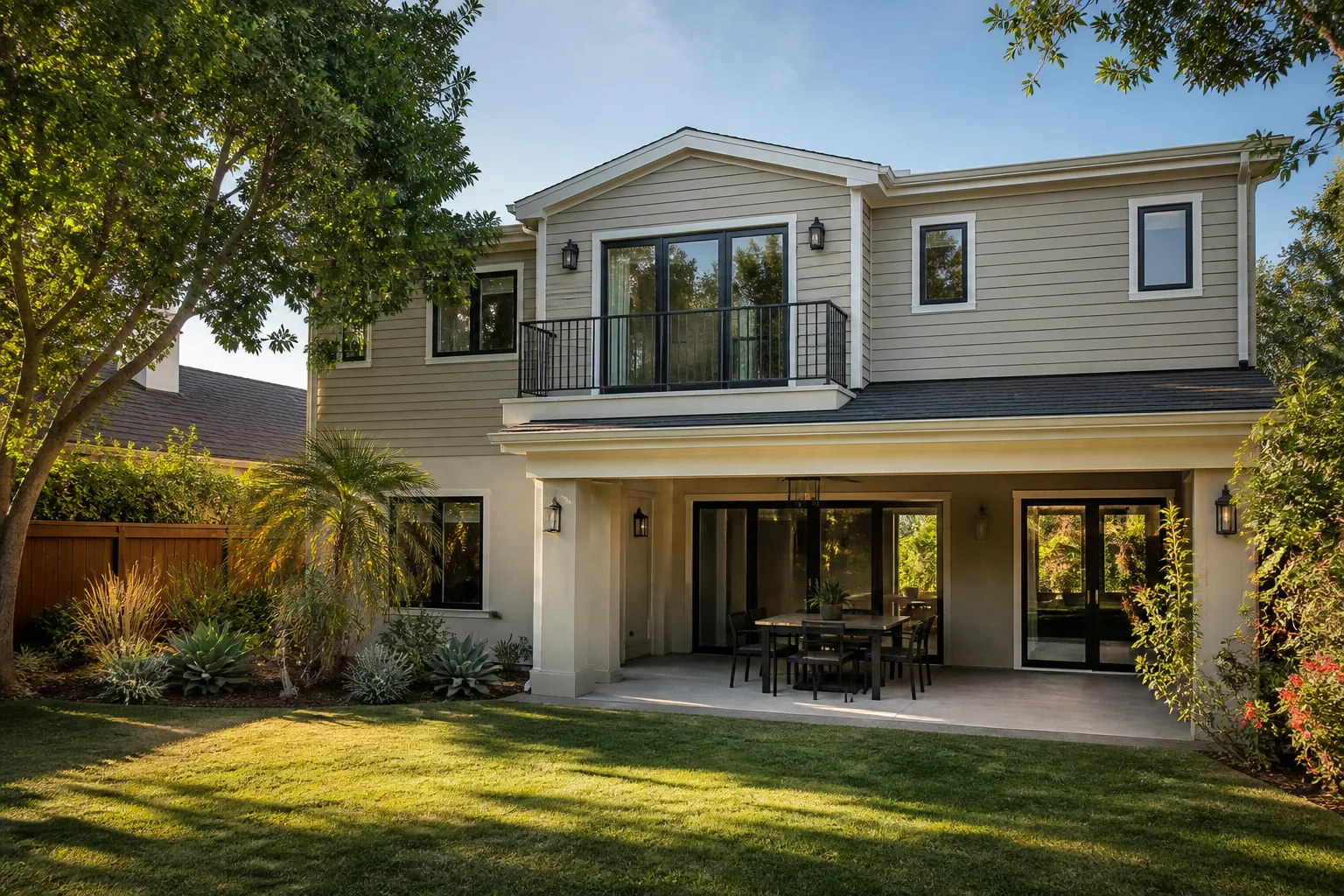
Anyone with a truck can buy HardiePlank at a supply yard. Being a James Hardie Preferred Remodeler is a different bar: the contractor is vetted by Hardie, holds the required experience, and is authorized to offer the product’s stronger warranty terms. A contractor who has simply used the product before gets none of that.
Here’s how to check in five minutes:
- Ask for the contractor’s Hardie Preferred Remodeler listing. Hardie publishes it, and it can be verified.
- Ask which HardieZone your address falls in and what that requires. If they hesitate on “HZ10,” keep looking.
- Ask what happens to the warranty if a grade clearance fails an inspection. A real Preferred Remodeler can answer without checking notes.
- Ask for a written scope that names the Hardie product line, the trim, the fastener type, and the paint spec. Vague scopes make warranty claims nearly impossible later.
We work with James Hardie on conventional room additions because the material is genuinely right for this climate when the installer is disciplined. That’s the operative word: disciplined. The best siding on earth is only as good as the crew putting it up. Our technicians have up to 20 years of experience, and every crew member arrives background-checked and in uniform because we want you to know exactly who is on your site.
Hardie vs. Stucco for a North Las Vegas Addition: Which Wins Over 10 Years?
Stucco is cheaper on day one. Over a 10-year horizon in North Las Vegas, Hardie is often the cheaper finish, mainly because it stops needing cosmetic attention and holds its look through the UV cycle. Here’s the realistic comparison.
| Factor | James Hardie Fiber Cement | Three-Coat Stucco |
|---|---|---|
| Typical installed cost on a room addition (before permit fees) | Roughly $10 to $16 per square foot of wall area | Roughly $8 to $13 per square foot of wall area |
| Repainting cycle in the desert | 7 to 10 years with a quality topcoat | 5 to 7 years, with elastomeric patching common along cracks |
| Cracking under heat cycling | Minimal; joints designed to move | Common along control joints and corners as the temperature swings |
| Blistering and termite exposure | None of either | None of either |
| Repair after impact or staining | Individual boards replace cleanly | Localized patching often mismatches the finish |
The cost difference at the bid stage is real, usually a few hundred to a couple thousand dollars depending on wall area. The trade is that stucco needs patching and repainting on a shorter cycle and tends to show hairline cracks within a few summers. If you want the finish to disappear into the maintenance list, Hardie wins over a decade. If you want the lowest bid today and don’t mind the upkeep, stucco is a defensible choice. Just make sure whoever bids it installs it correctly.
For a larger project built into the yard, the same material decision comes up in our ADU Builders in North Las Vegas work. Prefab platforms like Abodu and Plant Prefab handle their own envelopes, while a stick-built unit leaves the choice of siding to you.
What Should the Written Scope Say About Hardie Installation?
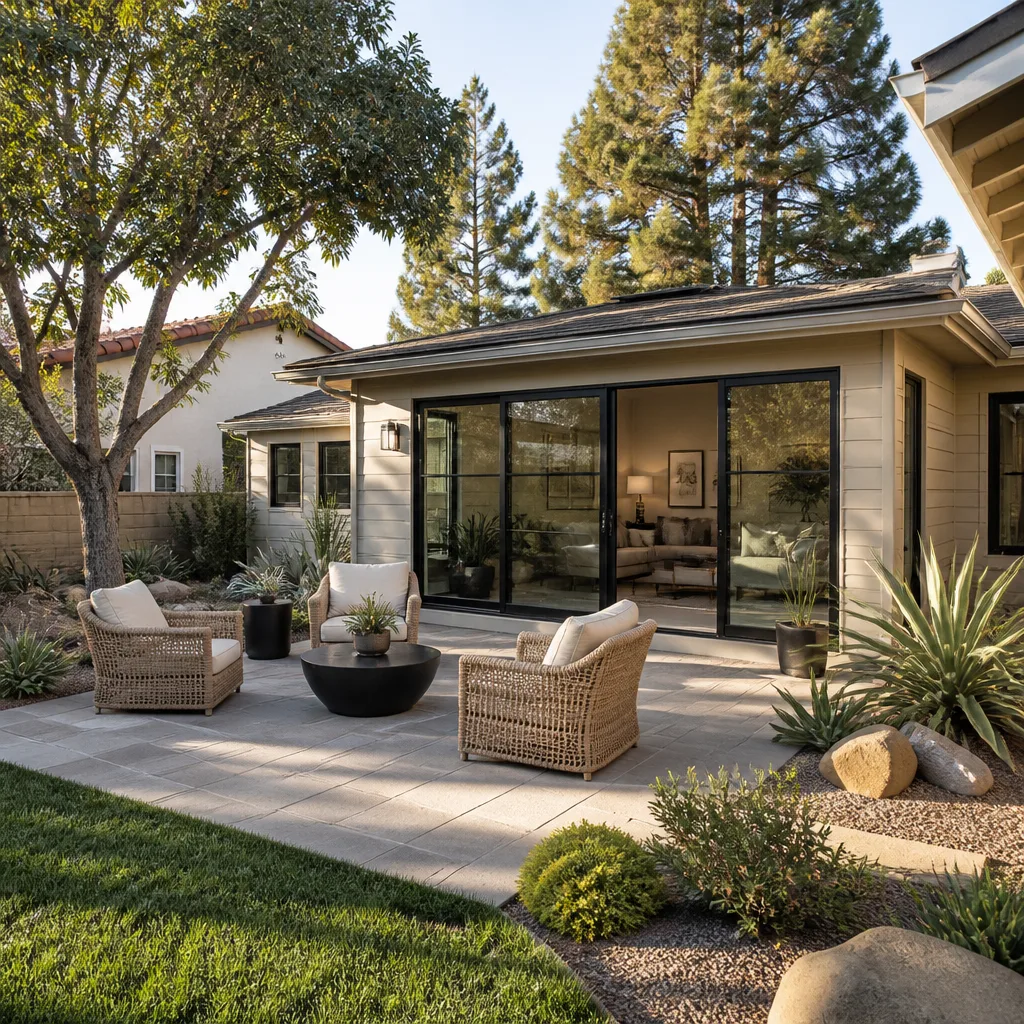
This is the piece most homeowners skip, and it’s the piece that matters if you ever need to file a warranty claim. The written scope on a room addition in North Las Vegas should be specific enough that a second contractor could read it and know exactly what was installed.
- Product line and profile: Name it. HardiePlank lap, HardiePanel vertical, or a trim product, plus the profile and exposure.
- Fastener specification: Type, length, and spacing, per Hardie’s HZ10 spec. Not “nailed as required.”
- Weather barrier: The brand and product of the barrier and how it integrates with the existing wall.
- Grade clearance: The target distance from the bottom edge of the siding to finished grade, in inches.
- Flashing detail at each penetration: Windows, doors, hose bibs, light fixtures, and vents.
- Paint or coating specification: Brand and product, with the warranty rating for the exposure.
- Cleanup and touch-up: How scrap boards and fasteners are handled and how paint touch-up is completed before the job is signed off.
If the contract in front of you doesn’t cover these points, ask for a revised scope. A contractor who builds to the standard will gladly write it down. One who won’t is telling you something.
When it’s time to call a pro: if your addition is going against an existing stucco wall, sitting on a slope, or has more than a couple of window penetrations, the details stack up fast and the cost of getting them wrong is real. That’s the moment to bring in someone who has done it many times in this heat. If you’re starting from a garage or an interior remodel instead, our Room Addition Contractor in North Las Vegas page covers that part of the work.
The Bottom Line
James Hardie fiber cement is often the right call for a room addition in North Las Vegas because the material handles heat cycling and UV better than vinyl or wood. The material only delivers if the installation follows HZ10 requirements for grade clearance, flashing at every penetration, and a real topcoat rated for the desert. That means asking your contractor about the HardieZone, verifying they are a Preferred Remodeler, comparing Hardie against stucco on a 10-year horizon and not just the bid, and getting the installation specifics into a written scope you can keep.
Every addition and ADU we build is backed by The Garrison Standard: a written price before work starts, work by the book and permitted where the city requires it, crews that are background-checked and uniformed, and a full-year written guarantee. If something fails inside that year, we come back and make it right at no charge.
If you’re in North Las Vegas and need help scoping a Hardie-clad addition, Fielding ADU Builders North Las Vegas offers free estimates. Call (844) 797-5166 and a live person will pick up.
Frequently Asked Questions
Hardie siding on a room addition typically runs $10 to $16 per square foot of wall area, installed, on top of the cost of the addition itself. A small addition’s siding package commonly lands in the range of a few thousand dollars in materials and labor, before permit fees. The total project cost depends heavily on foundation, framing, and interior finish. Call (844) 797-5166 for a written line-item quote on your specific plan – estimates are free.
It shouldn’t. Our price goes into writing before any work begins, so the number you approve on day one is the number on the final invoice. If the scope changes because you request something new, we write a revised price before doing the work. Change orders after the fact aren’t part of how we operate. Call (844) 797-5166 to talk through your project.
Hardie’s product warranty typically transfers to the next homeowner, but the transfer is conditional on the installation following the HardieZone manual. That’s the reason the written scope matters: if the paperwork is clean, the next buyer benefits; if the installation skipped HZ10 requirements, the warranty is at risk regardless of who owns the home. Keep your scope and product records. Call (844) 797-5166 if you want help reading a warranty document before you build.
Yes. Room additions in North Las Vegas require permits, and the work is inspected by the city. Permits get pulled and inspections get passed before the job is signed off. We don’t start framing on an unpermitted addition. Call (844) 797-5166 to schedule a free estimate and we’ll walk through the permit timeline for your lot.
Yes, and it’s a common choice. The envelope details are the same as a room addition, though the existing structure determines how the new siding ties in. If your garage wall is already stucco, the transition detail still applies. Start with our page on Fielding ADU Builders North Las Vegas home or call (844) 797-5166 to talk through your conversion.
Written by the team at Fielding ADU Builders North Las Vegas.
Need ADU Help?
Call Fielding ADU Builders North Las Vegas - licensed & insured, here with fast after-hours help in North Las Vegas.
(844) 797-5166