Last updated November 18, 2026
Room Addition Contractor Troubleshooting: Common Problems and How to Fix Them
A cracked foundation slab and a stalled permit both get called “delays” by contractors who want to avoid accountability. One is a structural emergency. One is a paperwork problem. Treat them the same way and you’ll spend money on the wrong fix while the real defect keeps spreading. The homeowners we meet in North Las Vegas usually arrive at the same crossroads: something has gone sideways with their addition, and nobody will tell them plainly whether the problem is bad work, a bad permit, or a bad contract. This guide teaches you to sort one from the other, because the fix is different every time.
Quick Answer
Most room addition problems trace back to one of three sources: a workmanship failure (the build itself is wrong), a permit failure (the work wasn’t inspected or approved), or a contract failure (the scope, price, or guarantee was never put in writing). Diagnose which one you’re facing before you argue, demand a fix, or file a complaint. The category tells you who pays, what leverage you have, and how quickly you need to act.
Table of Contents
- How to diagnose your room addition problem in three steps
- Is your contractor paused or has he abandoned the job?
- What a failed inspection means and who owns the fix
- Workmanship defects to watch for after drywall goes up
- How a written one-year guarantee changes your leverage
- The Nevada Contractors Board complaint process
- Contract language that prevents most of these problems
- Common mistakes to avoid
How to Diagnose Your Room Addition Problem in Three Steps
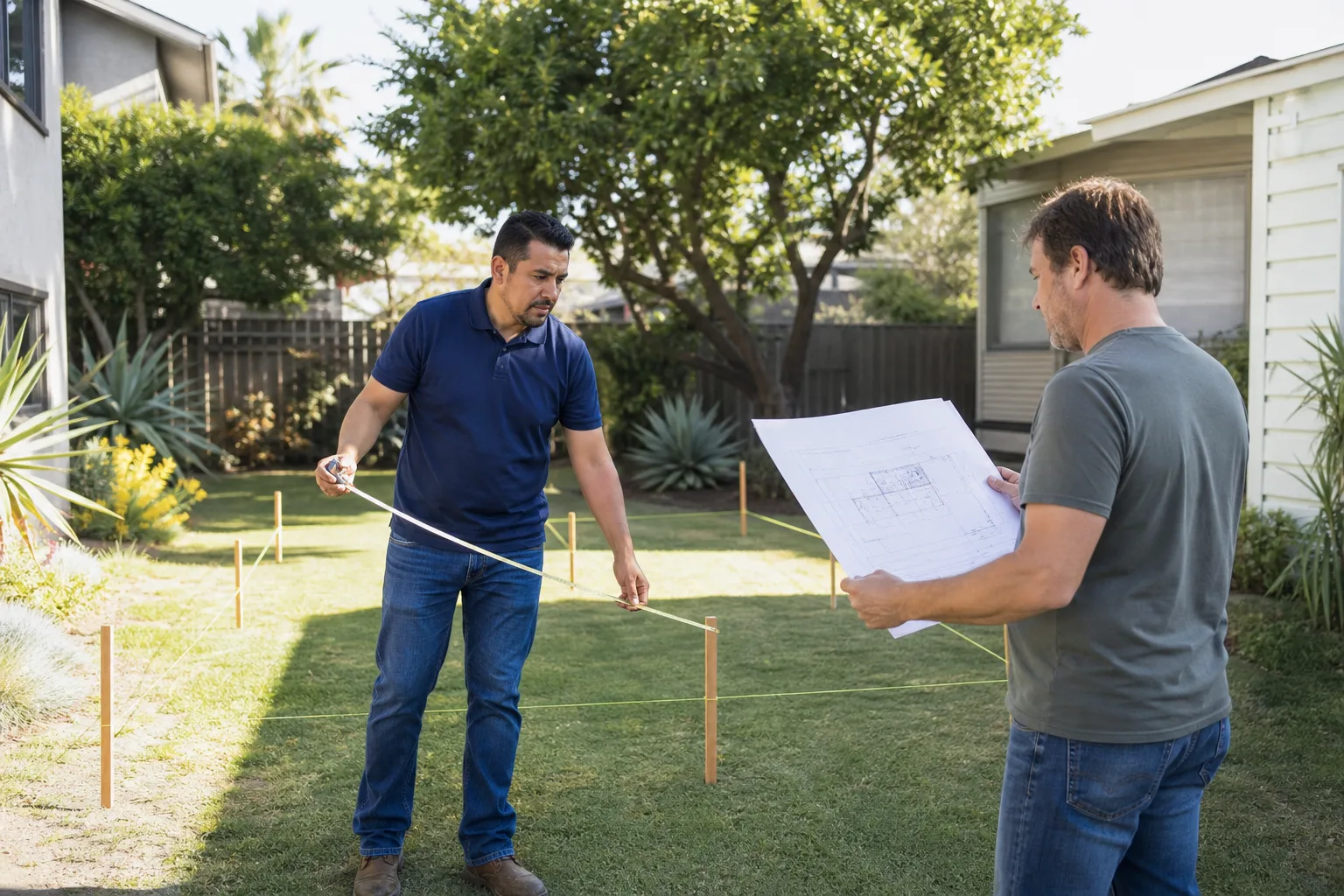
Before you call anyone, name the category. In our experience running room additions in North Las Vegas, the homeowner who can say “this is a workmanship issue, here’s my evidence” saves weeks of argument. The one who only says “it’s a mess” gets brushed off.
- Check the paper trail. Pull your contract, your scope of work, and your payment schedule. Does the document describe what’s now in dispute? Does it name a completion date, a price, a guarantee term? If the answer is no, you have a contract problem, and no amount of arguing on site will fix it. You need a written change order or a documented demand.
- Check the permit board. Call the city of North Las Vegas building department or look up your permit number online. Is there an open inspection? A correction notice? A finaled permit that shouldn’t be closed? A stalled permit is a permit problem; the fix is a phone call and sometimes a corrected plan set, not a lawsuit.
- Check the work itself. Look for measurable defects: a door frame that’s out of square by a half inch, a floor that flexes underfoot, a visible gap where the new roof meets the old. If the issue is a physical defect, photograph it with a tape measure in frame and timestamp it. That’s a workmanship problem, and the fix belongs to the builder.
Most disputes are really two or three of these tangled together. Sorting them lets you tell a contractor exactly what you expect and on what timeline. It also tells you when to stop talking and start documenting.
Is Your Contractor Paused or Has He Abandoned the Job?
Construction has natural pauses. Concrete has to cure. An inspection has to be scheduled. Framing waits on a delivery. But a pause and an abandonment look almost identical from the homeowner’s side, and telling them apart matters because the legal clock and your leverage differ.
Here’s how to tell the difference in a North Las Vegas addition. Las Vegas Valley heat changes the equation: crews often shift early-morning hours in July and August, so a quiet site at 2 p.m. in summer doesn’t mean the job is dead. Ask what the next scheduled milestone is and when it happens.
- Normal sequencing pause: the contractor can name the next step and a date. Materials are on order with a delivery window. An inspection is booked through the city. The foreman responds to texts within a day.
- Warning sign: the next step keeps moving a week at a time with no reason given. The crew stops showing up but the invoices keep coming. Subcontractors start calling you for payment because they haven’t been paid.
- Likely abandonment: two or more weeks with no crew, no contact, and no response to written notice. Subs or suppliers file liens. You’re calling and getting a full voicemail box.
Document every attempt to reach the contractor in writing. Send one formal notice by certified mail asking for a written schedule within a set number of days. That letter becomes the record you’ll need if the job really has been walked. If you’re restarting the project, a room addition contractor in North Las Vegas can assess what’s salvageable before you tear anything out.
What a Failed Inspection Means and Who Owns the Fix
A failed inspection is not a disaster. It’s a documented, specific list of items the city requires before the work can proceed. What matters is whether the correction is the contractor’s responsibility or yours, and in the vast majority of cases it’s the contractor’s, because they built it and they pulled the permit.
When an inspector writes up a correction, the report says exactly what failed: a framing nail pattern, a window flashing detail, electrical bonding, a stairway riser height. Read it plainly. Then put one question in writing to your contractor: “This correction notice was issued on [date] for work your crew performed. Please confirm in writing that you will schedule the re-inspection and correct all items at no additional cost.”
North Las Vegas runs its inspections through the city’s building department, and the correction stays open until a re-inspection passes. That open item follows the property. If you ever sell, an unpermitted or unresolved addition can derail the sale, so the paperwork is worth fighting for now.
- Get a copy of the correction notice in writing, not verbally.
- Send it to the contractor and ask for a written schedule to correct.
- Confirm in writing that corrections are at no cost to you unless the failure traces to a change you requested.
- Keep the re-inspection record with your project file.
If the contractor pulls the permit in their name and then stalls, the city has no obligation to chase them for you, but a documented paper trail strengthens any complaint you file later. Read more about how a properly managed garage conversion contractor in North Las Vegas handles inspections before the first nail is set.
Workmanship Defects to Watch for After Drywall Goes Up
Once drywall closes the walls, you lose sight of the framing, the plumbing rough-in, and the insulation. That’s why the walk-through after drywall is the single most important inspection you’ll do as the owner. Bring a level, a tape measure, and a flashlight.
These are the defects we see most often in North Las Vegas additions, and each one is checkable in a few minutes:
- Soft spots in the floor. Walk the room in bare feet or socks. A floor that flexes or sounds hollow underfoot usually means a floor joist was notched too deep or a subfloor panel wasn’t glued and screwed properly. That’s a structural workmanship issue, not cosmetic.
- Out-of-square door frames. Close each door. It should latch smoothly without you pushing. A door that rubs on one side, or a corner gap around the frame that runs wide then narrow, means the framing was racked. That’s hard to fix later without opening the wall.
- Gaps where the new roof meets the old roofline. Take a photo from outside where the addition ties into the existing house. Any visible daylight, lifted flashing, or a gap in the siding seam is a water-intrusion risk, and Las Vegas monsoon storms will find it. James Hardie siding, when installed and flashed to the letter, closes that seam correctly, but it has to be done at the tie-in, not patched after.
- Wavy drywall and popped screws. A few screw pops are normal for the first year as the framing settles. A wall that’s visibly wavy or cracks along the same seam repeatedly points to a bigger issue.
- Doors and windows that stick seasonally. Some seasonal movement is normal in desert heat. Windows that won’t open at all in summer point to a window installed without proper flashing or shimmed wrong.
Photograph every defect with a measuring tool or coin for scale, and date it. A clear photographic record is worth ten phone calls.
How a Written One-Year Guarantee Changes Your Leverage
Finding a workmanship defect six months after move-in is a completely different situation depending on whether your contractor put a guarantee in writing. With a written term, you call and they come back. Without one, you’re negotiating from zero and usually paying a second contractor to fix the first contractor’s work.
This is the part most homeowners never verify before they sign. We encourage everyone to ask one question: “Show me the guarantee in writing, with the term, what it covers, and how you make it right.” If it isn’t on paper, it doesn’t exist. A verbal “I stand behind my work” is worth exactly what you paid for it.
For contrast, our own projects are covered by The Garrison Standard: workmanship defects are covered for 365 days, and if something fails inside that window, we return and correct it at no charge. That’s the leverage a written guarantee gives you. Under a written guarantee, a soft spot in the floor at month eight is a phone call. Without one, it’s an argument over who’s paying to open the wall.
Before you hire any contractor for an addition or ADU, ask three things in writing: the completion date, the final price before work starts, and the guarantee term. Fielding ADU Builders North Las Vegas hands you a written price before any work starts, and every project carries that year-long written guarantee. If you’re weighing a backyard build instead, our ADU builders in North Las Vegas follow the same standard.
The Nevada Contractors Board Complaint Process
If a contractor has walked the job, taken your money, or refused to correct a documented defect, the Nevada State Contractors Board is where you escalate, and it can do more than a lawsuit for many homeowners because it can act faster and costs you a filing fee rather than attorney’s fees. Knowing when to file, and what the board can and can’t recover, keeps you from expecting the wrong outcome.
When to file: when the contractor is licensed through the board, when you have documented a failure to perform or a workmanship defect, and when a written demand hasn’t been answered. Filing a complaint starts a process that can lead to mediation and, if the work is bad enough, discipline against the license.
What the board can recover: it can investigate, order the contractor to correct the work, and in some cases award damages from a recovery fund when a licensed contractor’s work is defective and the contractor won’t fix it. It can also discipline or suspend the license.
What the board can’t recover: it won’t award attorney’s fees, it won’t touch work done by an unlicensed operator the same way, and it can’t force a crew back to a site within a deadline you set. It’s a regulatory process, not an emergency repair service. If your roof tie-in is leaking against a monsoon, call a builder and fix it, then pursue recovery.
Bring the board everything: the contract, the written price, the scope, photos, the correction notices, and evidence of any payments. A complaint built on paper is one the board can act on. For legal advice about your specific situation, a Nevada construction attorney is the right call, not a builder.
Contract Language That Prevents Most of These Problems
Nearly every problem in this guide gets smaller or disappears if the contract is written tightly to begin with. The Garrison Code spells out the operating rules we work by, and they map onto the questions you should ask any contractor: show up in the window, price in writing, build by the book, leave it clean, and stand behind it for a year.
When you review a contract for a North Las Vegas room addition, confirm these are spelled out in the document, not promised verbally:
- Fixed written price before work starts. The number you approve on day one should be the number on the final invoice, with a clear process for any change you request in writing.
- A detailed scope of work. What’s included, what’s excluded, what materials are specified, and who supplies them.
- A completion date and a defined schedule. A real date, not “within a reasonable time.”
- The guarantee, in writing. What it covers, how long it runs, and how the contractor makes it right.
- Permit responsibility. Who pulls the permits, and that all work is inspected and signed off.
- Payment tied to milestones. Payments released as verified stages are completed, not on an up-front lump sum.
A contractor who won’t put any of these in writing is telling you something before they lift a hammer. Background-checked, uniformed crews and a live person answering the phone around the clock (24/7) are the other signs a contractor runs a tight operation rather than a handshake and a hope. The same written-price-first standard applies to add-ons tuned to your lot, like a garage conversion or backyard ADU in North Las Vegas.
Common Mistakes to Avoid
- Signing a “lump sum” contract with no scope. A price with no described deliverables is a blank check. Insist on a line-item scope before you sign.
- Treating a paused job and a walk-off identically. Pausing is normal; abandonment needs a written notice and a paper trail. Don’t panic over a curing slab, and don’t wait three months on a vanished crew.
- Verifying the guarantee only verbally. Six months after move-in, “we stand behind our work” is worthless if it isn’t on paper. Get the term and the coverage spelled out.
- Letting the contractor own the permit and then stall. Follow the permit board on the city’s site yourself. It’s free, and it’s the fastest way to catch a lie about inspection status.
- Fixing a defect without photographing it first. Frame each defect with a tape measure or coin for scale, dated, before anything is covered up or patched.
- Paying ahead of progress. Paying on a large up-front chunk weakens your leverage if the crew disappears. Tie payments to verified milestones.
- Not accounting for Las Vegas Valley heat and monsoon storms. A roofline tie-in that looks fine in a dry winter may fail in the first summer storm. Inspect the seams and flashing with that season in mind.
When to Call a Professional
Call a professional when the defect is structural or the stakes are high: a floor that flexes, a roof tie-in that leaks, an out-of-square frame, a correction notice on a permit, or a contractor who has abandoned a job that’s already half built. Don’t mask a structural defect with a cosmetic patch, and don’t open a load-bearing wall to investigate it yourself. If you’ve been left with a stalled permit or a half-finished addition in North Las Vegas, a written assessment of what’s wrong and what it will take to finish is worth more than a dozen phone calls. Fielding ADU Builders North Las Vegas offers free estimates in North Las Vegas. Call (844) 797-5166 to schedule one.
Frequently Asked Questions
Send one written notice by certified mail asking for a written schedule within a set number of days, and document every attempt to reach them. If two or more weeks pass with no response after that notice, treat it as abandonment and start building the paper trail for a complaint. If you need to restart, call (844) 797-5166 for a free assessment.
Usually no. If the contractor pulled the permit and performed the work, the correction is their responsibility unless the failure traces to a change you requested. Get the correction notice in writing, ask the contractor to confirm in writing they’ll fix all items at no cost, and keep the re-inspection record.
It should cover workmanship defects and should be spelled out on paper before you start. Under The Garrison Standard, workmanship defects are covered for 365 days, and if something fails we come back and correct it at no charge. Ask any contractor to show you their term, coverage, and process in writing.
It can investigate, order corrections, discipline the license, and in some cases award recovery from a fund for defective licensed work, but it won’t award attorney’s fees or act as an emergency repair crew. It’s a regulatory route, not a lawsuit; bring your contract, photos, and notices. For legal advice about your situation, talk to a Nevada construction attorney.
A simple room addition typically takes several months, and the timeline depends on design, permitting, and build method. The contractor’s written schedule should name the next step and a date for each milestone. Ask for that schedule in the contract, not verbally.
The contractor still owns the permit, the site prep, and the tie-in work, even when the structure is built off site on a platform from Plant Prefab or a shed-style unit from Tuff Shed. The troubleshooting rules are the same; verify the written scope, the inspection record, and the guarantee before anything is delivered.
When to Walk Away and Start Over
Some problems are fixable in a phone call. Others mean the contractor has walked and you need a second builder to finish a half-built addition, correct a correction notice, and close out the permit. Knowing which is which saves money and time. If your job has stalled, we can assess the work in writing and give you a clean, fixed price to finish. Call (844) 797-5166 for a free estimate in North Las Vegas.
The Bottom Line
Most room addition headaches start in the contract, not the build. Diagnose whether a problem is a workmanship failure, a permit failure, or a contract failure before you argue, and the fix becomes obvious. A failed inspection is the contractor’s to correct when they pulled the permit. A paused job is normal; an abandoned one needs written notice and a paper trail. Check the tie-in and the framing after drywall goes up, and get a guarantee on paper before you sign. A fixed written price, a clear schedule, and the 365-day Garrison Standard are your best protection, and a live person answering every call is a good sign you’re dealing with a real operation. Written by the team at Fielding ADU Builders North Las Vegas.